
Investing
Harness the Power of Unconstrained Fixed Income Investing
Allspring Global Income Fund

A one-stop solution with the flexibility to adapt as markets fluctuate, creating the potential to deliver a more consistent return stream
Flexible, multi-sector approach
Allows dynamic allocation and implementation of best ideas across a breadth of alpha sources.
Truly global and diversified
With a broad and transparent set of allocation ranges across a wide array of global fixed income sectors, benchmarked to the Global Aggregate Index.
Seeks consistent and attractive return stream
Targets attractive income and risk-adjusted returns with downside protection against market volatility.
Experienced investment team
Managed by a highly seasoned, award-winning team with specialist expertise across fixed income sectors and a proven 10-year strategy track record.
ESG integration
The fund is classified under Article 8 of the EU Sustainable Finance Disclosure Regulation (SFDR).*
*Promotes environmental and social characteristics but does not have a sustainable investment objective
This flexible, opportunistic fixed income portfolio sources income from our best global ideas
The team’s philosophy revolves around three core beliefs:
01.
Primary research
Conducted by dedicated sector specialists, primary research is the optimal approach to uncover a wide range of investment opportunities.
02.
Relative value focus
Fixed income markets offer alpha opportunities to active managers that effectively employ a relative value framework to sector, issue selection duration and yield curve decisions.
03.
Comprehensive risk management
Robust portfolio construction in combination with comprehensive risk control lead to consistent alpha generation over a market cycle.
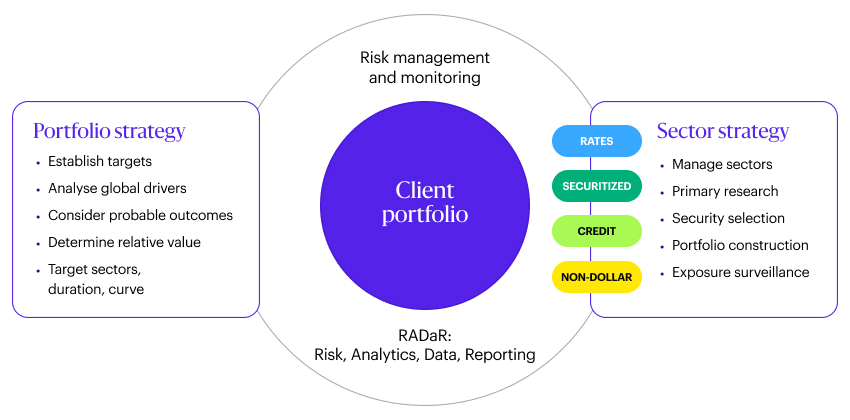
How our investment process works
The team’s investment process consists of three components: portfolio strategy, sector strategy and risk management.
We provide fixed income expertise with decades of trusted experience
Size and capabilities
Expertise
Performance
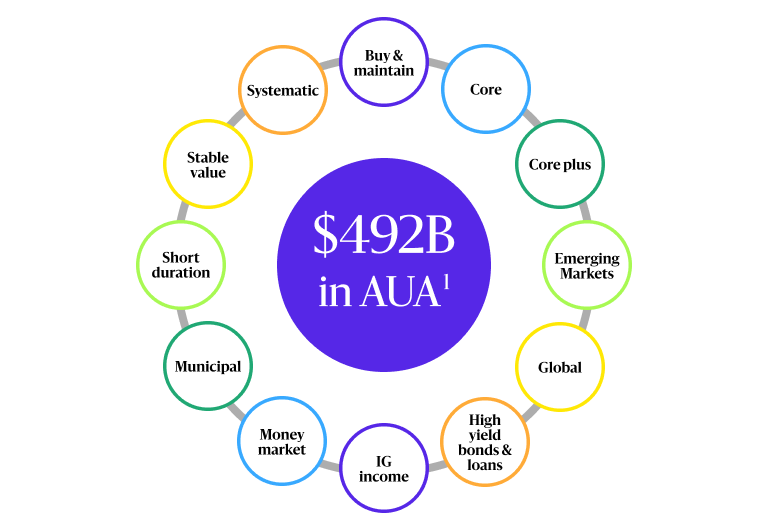
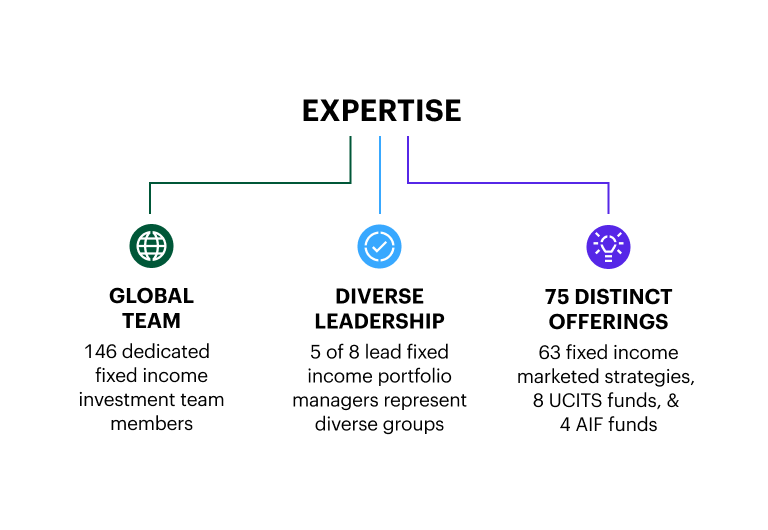
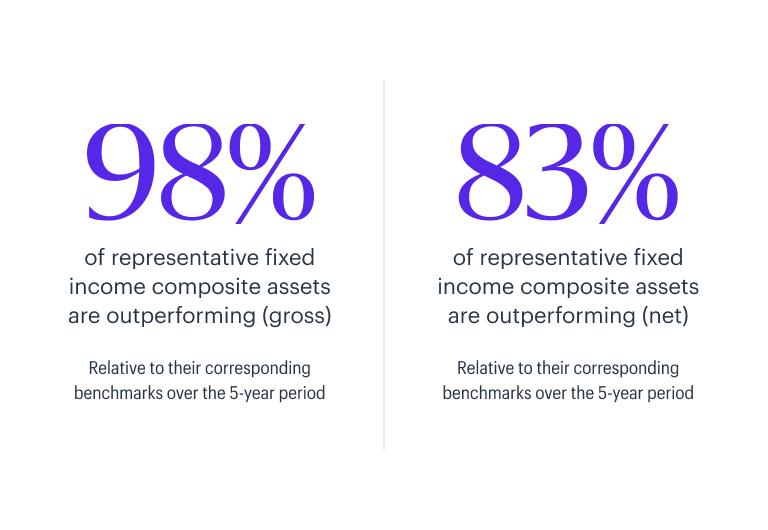
Figures are as of 30-Jun-26, unless otherwise noted. Past performance is not indicative of future results. Sources: 1. Allspring and affiliates. Please note that the assets under advisement (AUA) figures provided include discretionary and non-discretionary assets and have been adjusted to eliminate any duplication of reporting among assets directed by multiple investment teams and includes $79B from Galliard Capital Management ($58B stable value; $21B fixed income). AUA includes non-discretionary assets that are not captured in Allspring’s assets under management (AUM) figure of $570B which includes Galliard, an investment advisor that is not part of the Allspring trade name/GIPS firm. Numbers may not add up to the total presented due to rounding. †For illustrative purposes only. Ratings and awards are shown for illustrative purposes only to demonstrate our past performance. They are not a guarantee of future performance and should not be relied upon when making an investment decision. All figures are in US$.
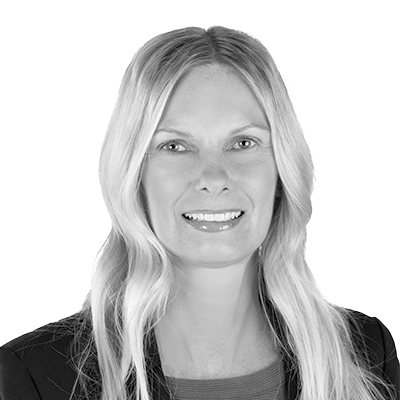
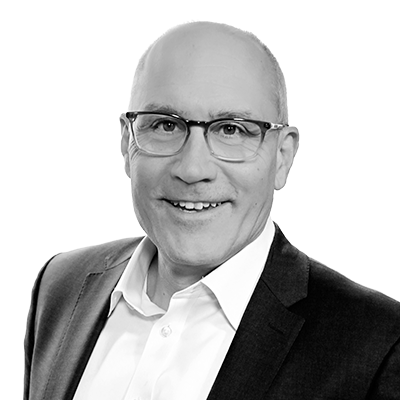
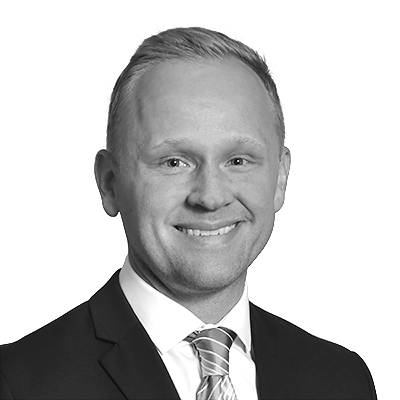
Allspring Global Income portfolio management team
Consistent, experienced team
- 26 years average industry experience
- 20 years average firm tenure
- $55.7 billion team assets under management and advisement
- $18.4 billion in multisector bond strategies
Sector specialist model
Dedicated sector specialist portfolio managers engage in primary research and partner with traders and credit research analysts to uncover opportunities and unlock relative value
Flat organisational structure
- The same team members define and implement portfolio strategy
- Portfolio managers are engaged in the markets and close to the portfolio
Sources: Allspring, figures are as of 30-June-2026, unless otherwise otherwise noted. All figures are in US$.



Learn about the fund
Visit the fund page for performance, deeper investment details and fund documents.

Featured insights

Noah Wise and Hannah Rosencrantz look back on a second year of volatile market developments, and discuss why flexibility matters for fixed income investors.

Global fixed income markets can change quickly. Learn how a rolling six-month outlook can help investors assess relative value, challenge existing positions and adapt portfolio allocations as risks and opportunities evolve.

Global bond markets have evolved, offering strong yields but demanding a flexible approach. Examining portfolios through the lens of return drivers shows a dynamic, multi-sector, research-driven approach can unlock diverse, resilient returns over time.

George Bory, chief investment strategist for Allspring Fixed Income, explains how active bond investing can enhance outcomes by focusing on investor needs, weighing opportunity costs, and capitalizing on market inefficiencies.

Key risks
Debt securities risk: Debt securities are subject to credit risk and interest rate risk and are affected by an issuer’s ability to make interest payments or repay principal when due.
High yield securities risk: High yield securities are rated below investment grade, are predominantly speculative, have a much greater risk of default and may be more volatile than higher-rated securities of similar maturity.
Global investment risk: Securities of certain jurisdictions may experience more rapid and extreme changes in value and may be affected by uncertainties such as international political developments, currency fluctuations and other developments in the laws and regulations of countries in which an investment may be made.
Emerging markets risk: Emerging markets may be more sensitive than more mature markets to a variety of economic factors and may be less liquid than markets in the developed world.
Asset-backed securities risk: Asset-backed securities may be more sensitive to changes in interest rates and may exhibit added volatility, known as extension risk, and are subject to prepayment risk.
Contingent convertible bonds risk: These instruments can be converted from debt into equity because of the occurrence of certain predetermined trigger events including when the issuer is in crisis resulting in possible price fluctuations and potential liquidity concerns.
Currency risk: Currency exchange rates may fluctuate significantly over short periods of time and can be affected unpredictably by intervention (or the failure to intervene) by relevant governments or central banks, or by currency controls or political developments.
ESG risk: Applying an ESG screen for security selection may result in lost opportunity in a security or industry resulting in possible underperformance relative to peers. ESG screens are dependent on third-party data and errors in the data may result in the incorrect inclusion or exclusion of a security.
Leverage risk: The use of certain types of financial derivative instruments may create leverage which may increase share price volatility.